Santa Maria Toscana aims to create a place to experience self-sustaining organic gardening and cooking, together with creative arts activities. The house has been renovated and the barn structure converted to studio spaces for creative arts activities.
The design of the gardens focused on creating new edible, medicinal and flower gardens that complement the surrounding built and natural environment. The creation of natural spatial transitions, the definition of zones and specific spaces as well as water management were the key challenges.
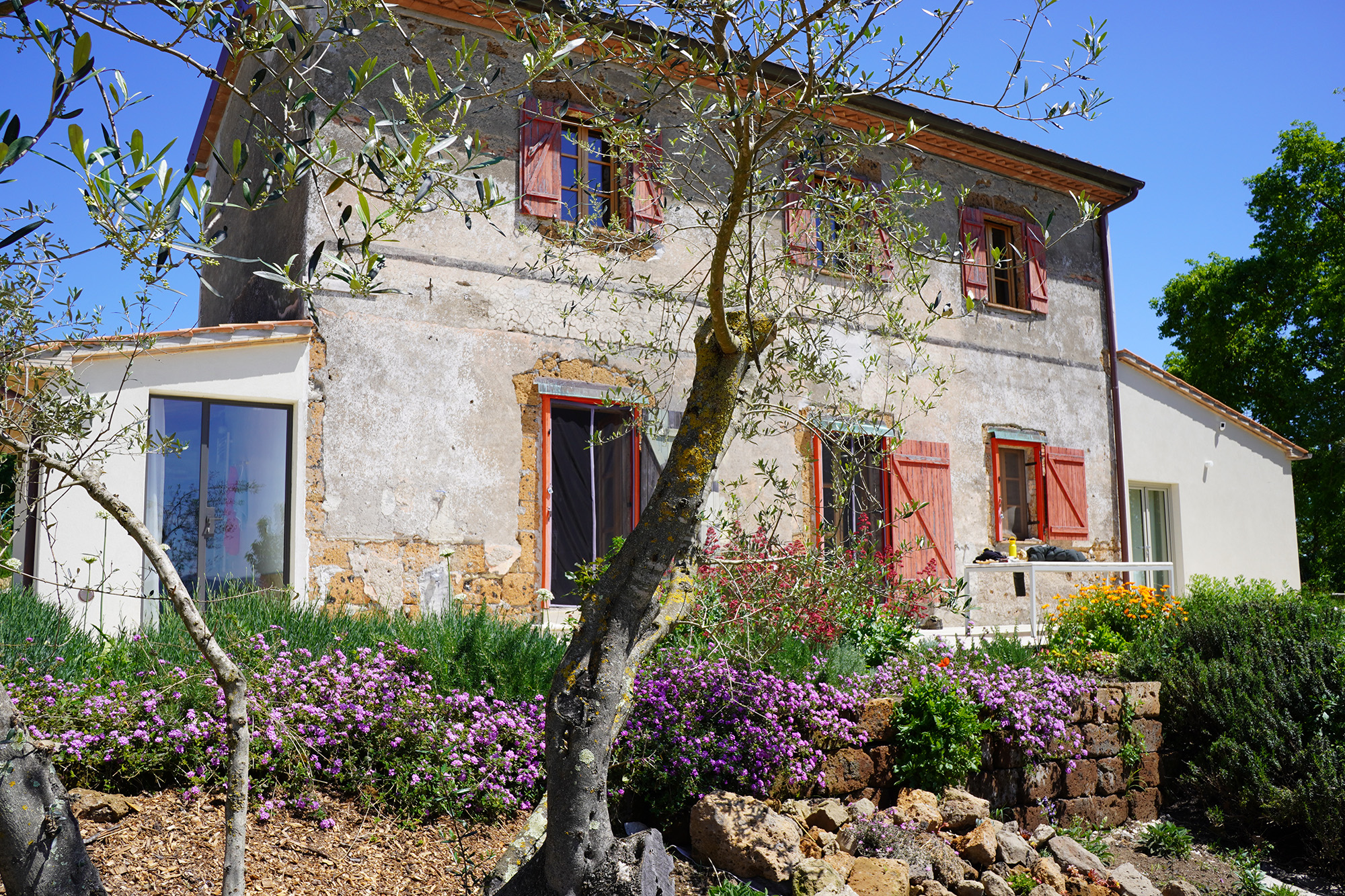
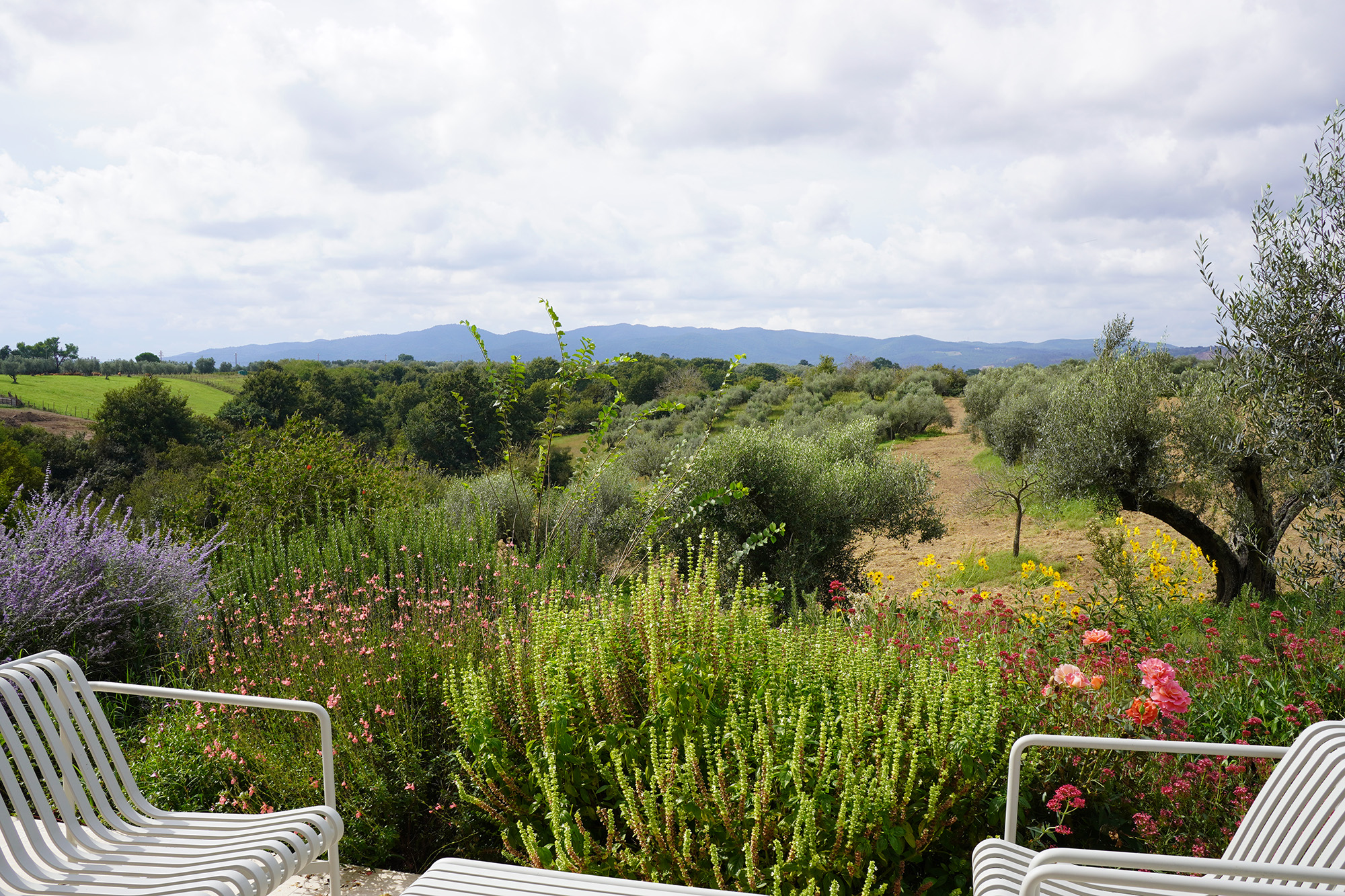
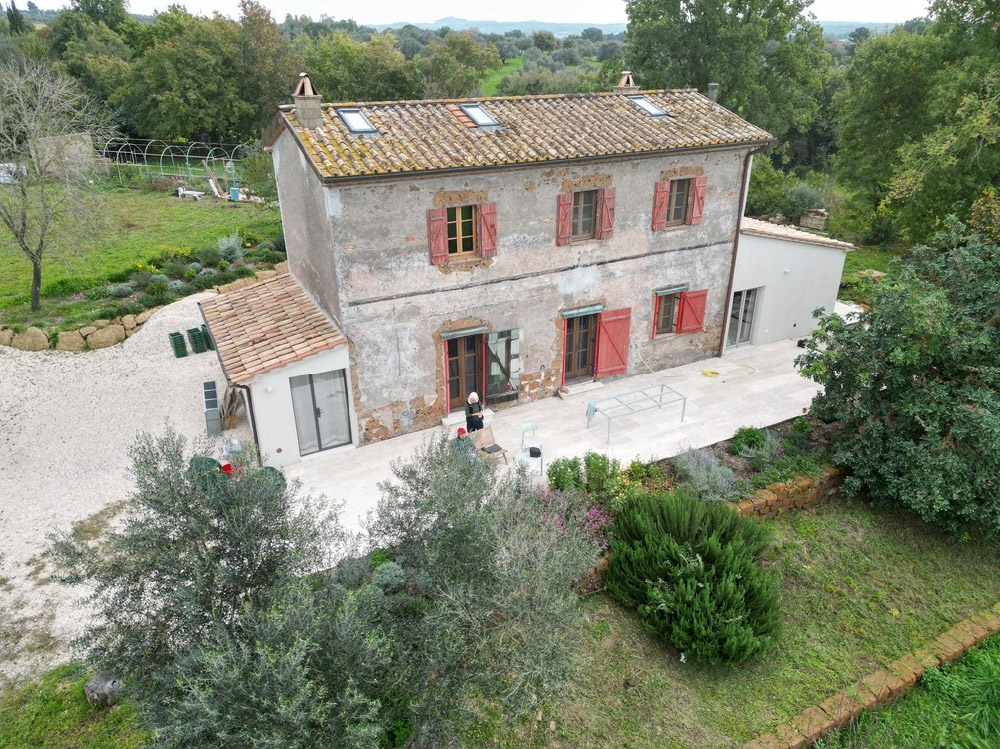
Each garden area has a different character and relation to the surrounding landscape. Two new main patios were created to serve the house and studio as adjacent outdoor spaces. At the studio the small garden is peaceful, shaded and contained. The front of the house has an expansive panorama view across the olive orchard and the fields and valleys beyond—the terrace extending the entire length.
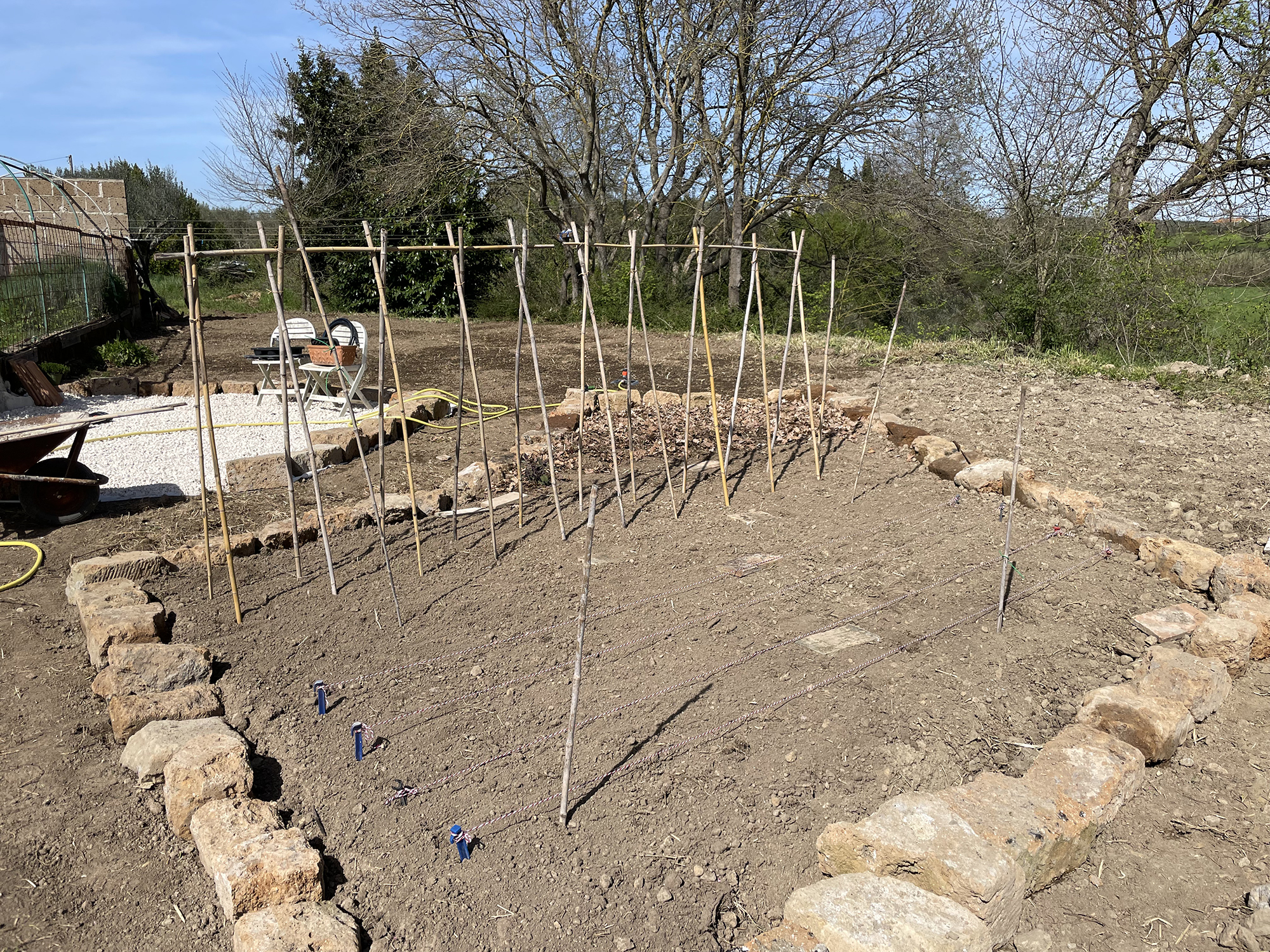
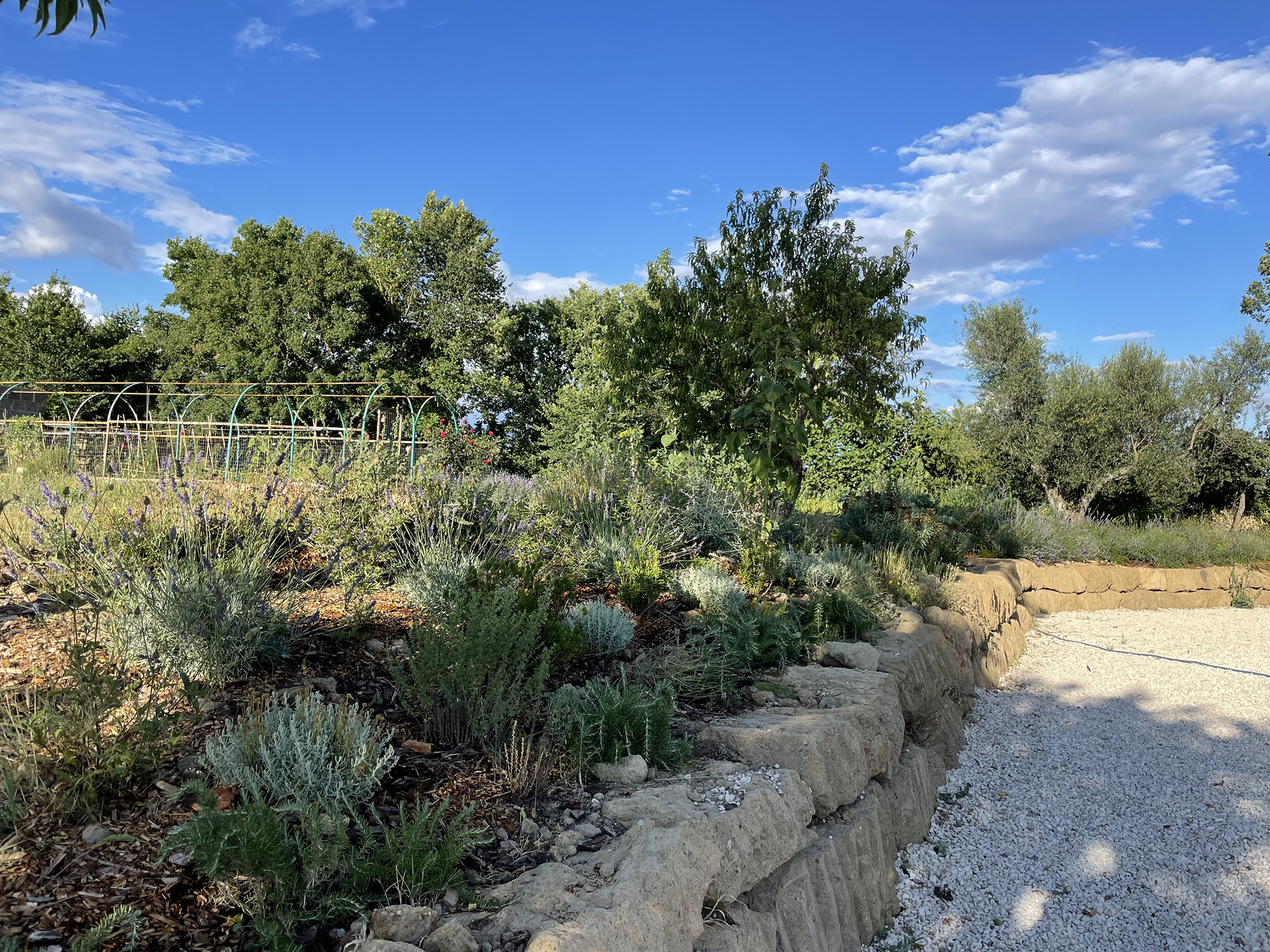
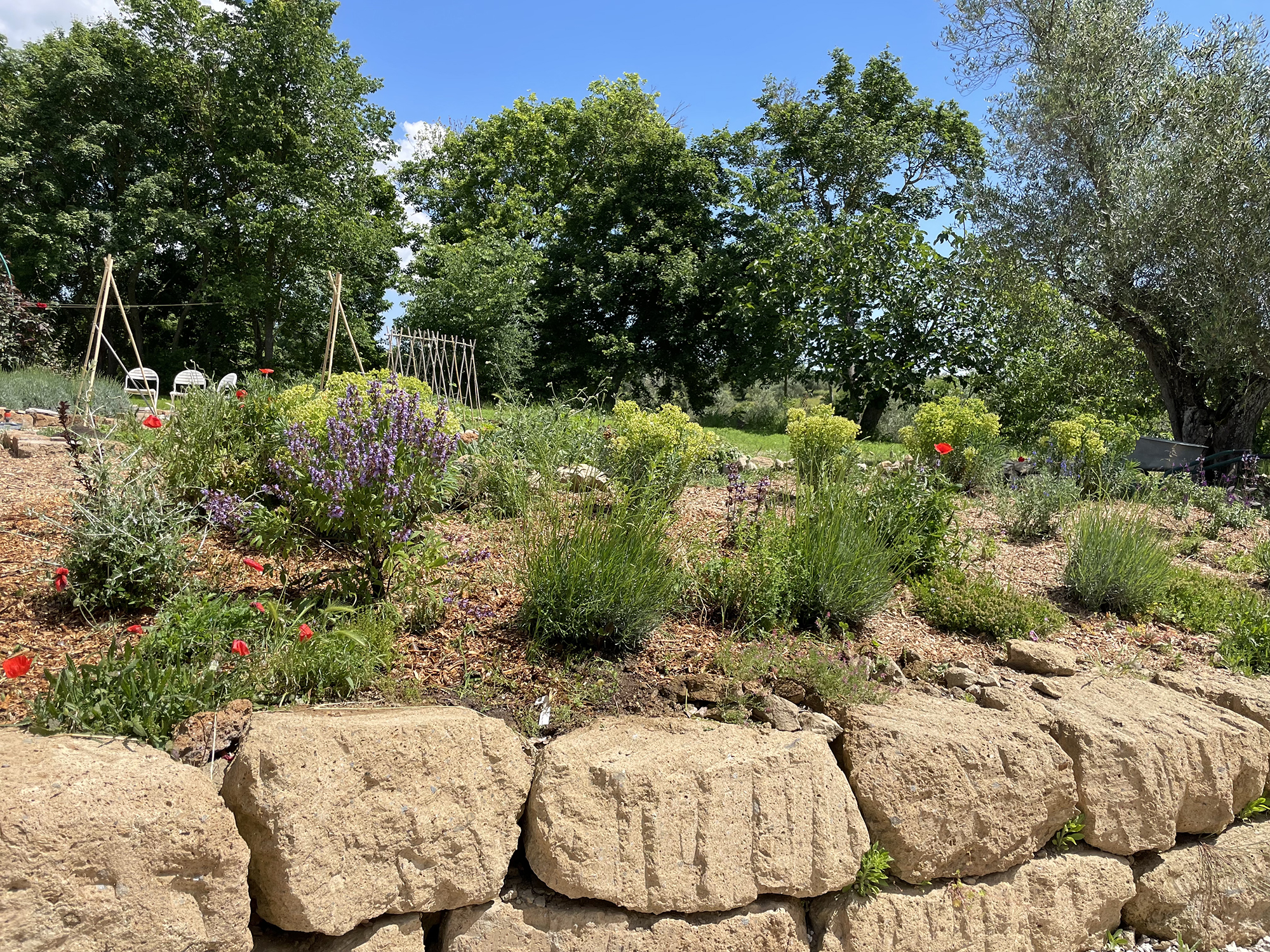
A dry-wall system, using reclaimed local tuff stone, was implemented in order to terrace the steep hillside to the South-West. The terracing not only mitigates water use and distribution, but also forms plantable, accessible land area.
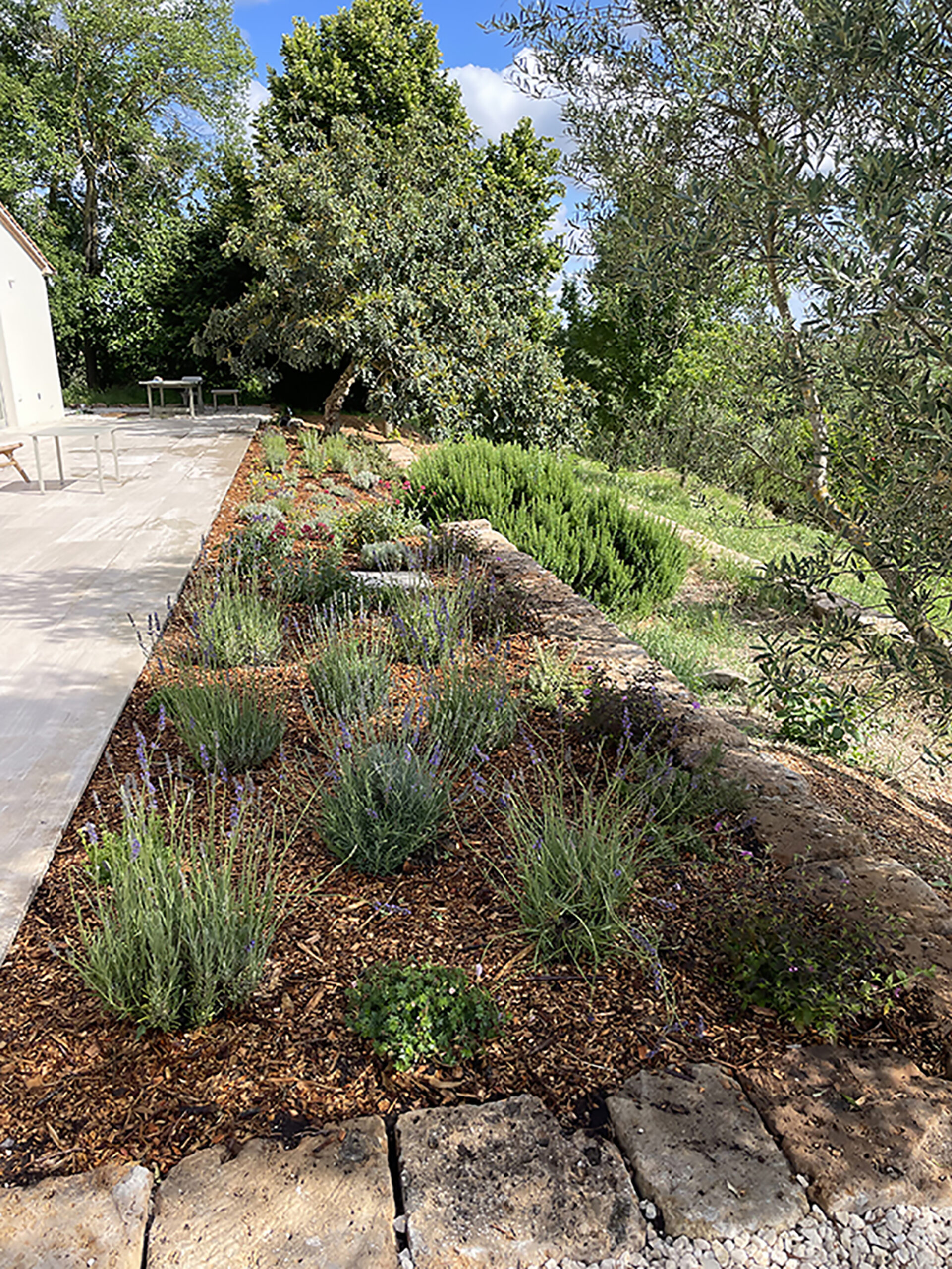
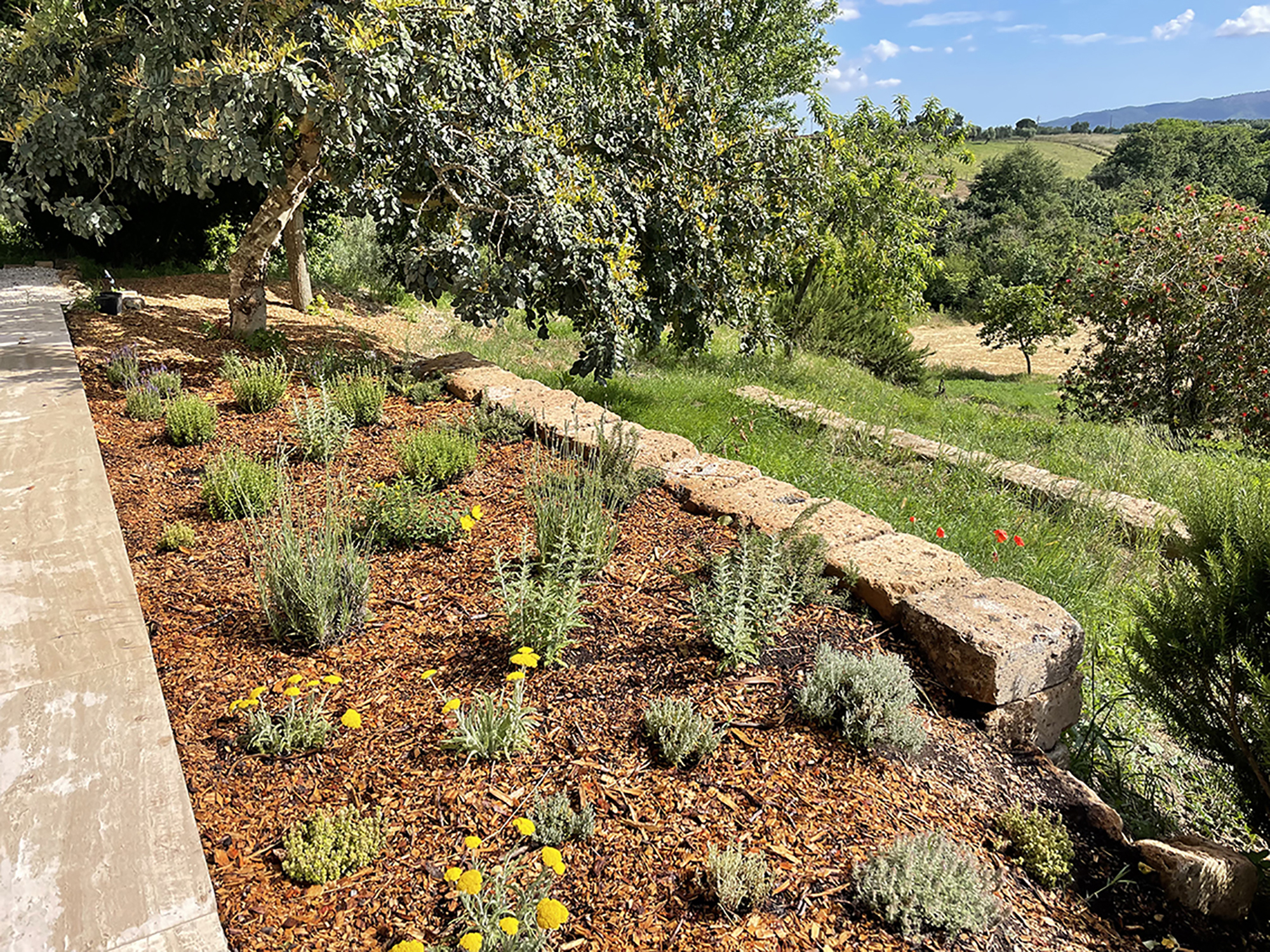
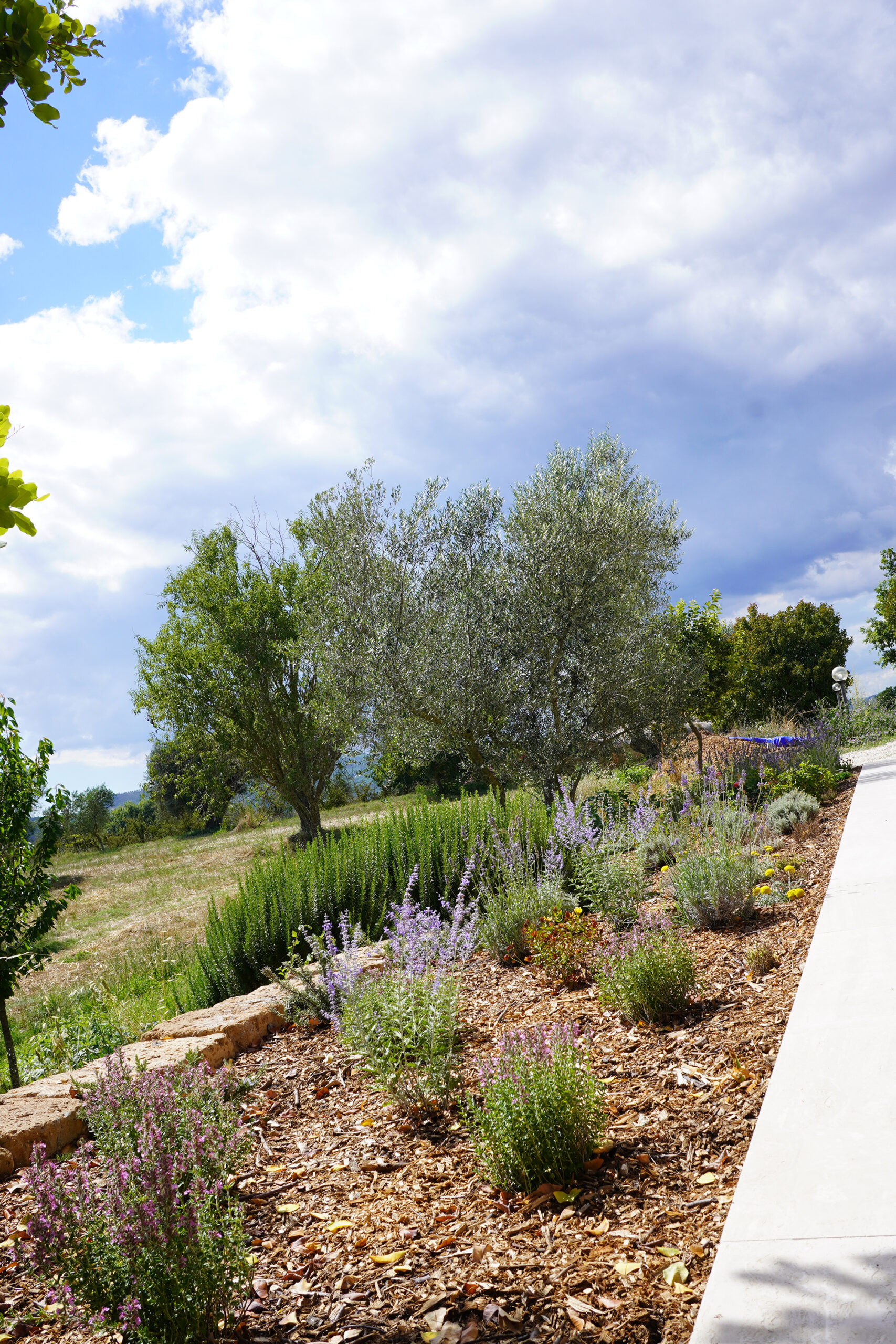
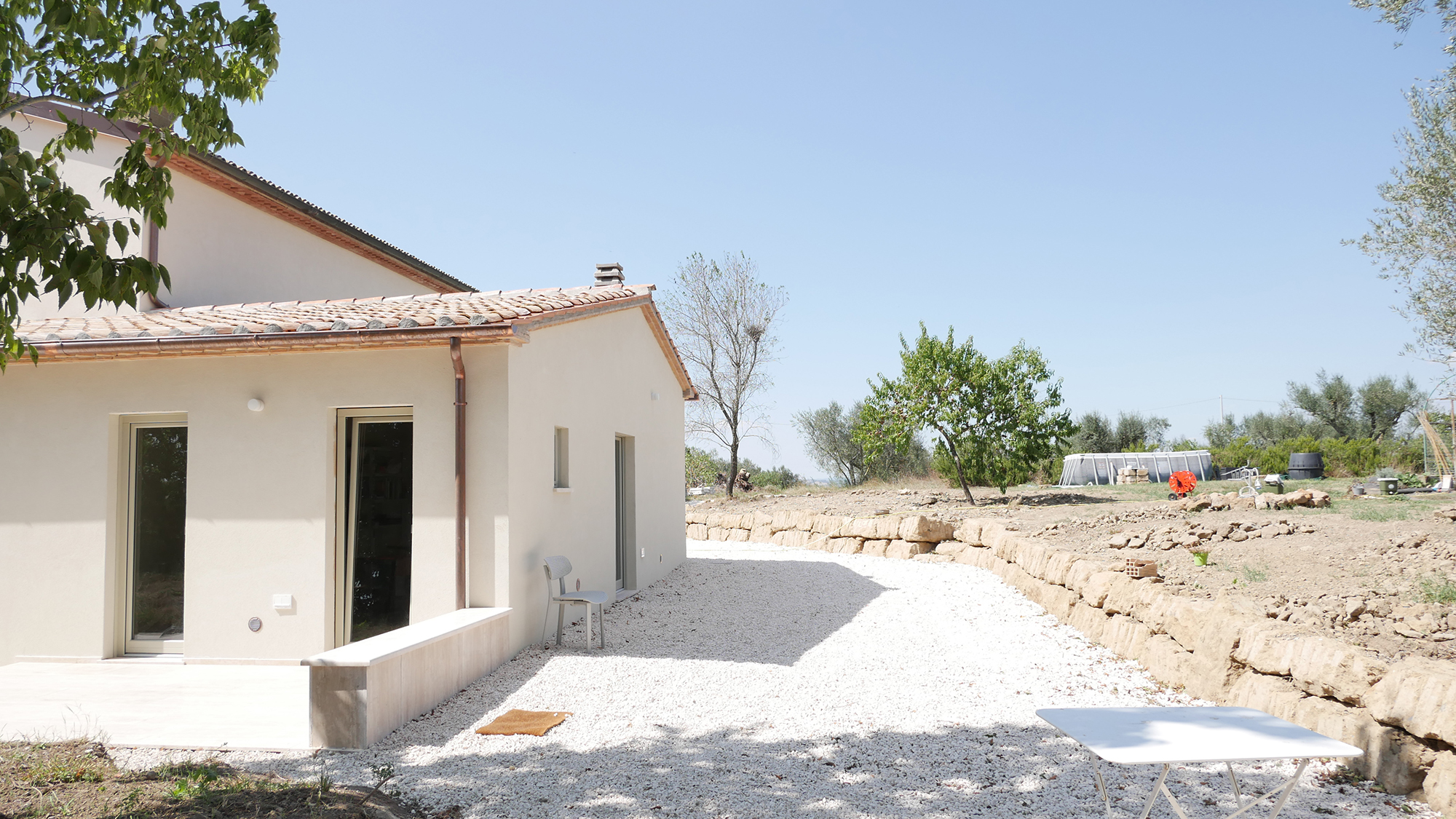
A new dry-wall terrace was created to the East in order to mitigate drainage problems, keeping water away from the house. This dry-wall frames the house and forms a border between the gravel covered work area, behind the studios, and the kitchen garden.
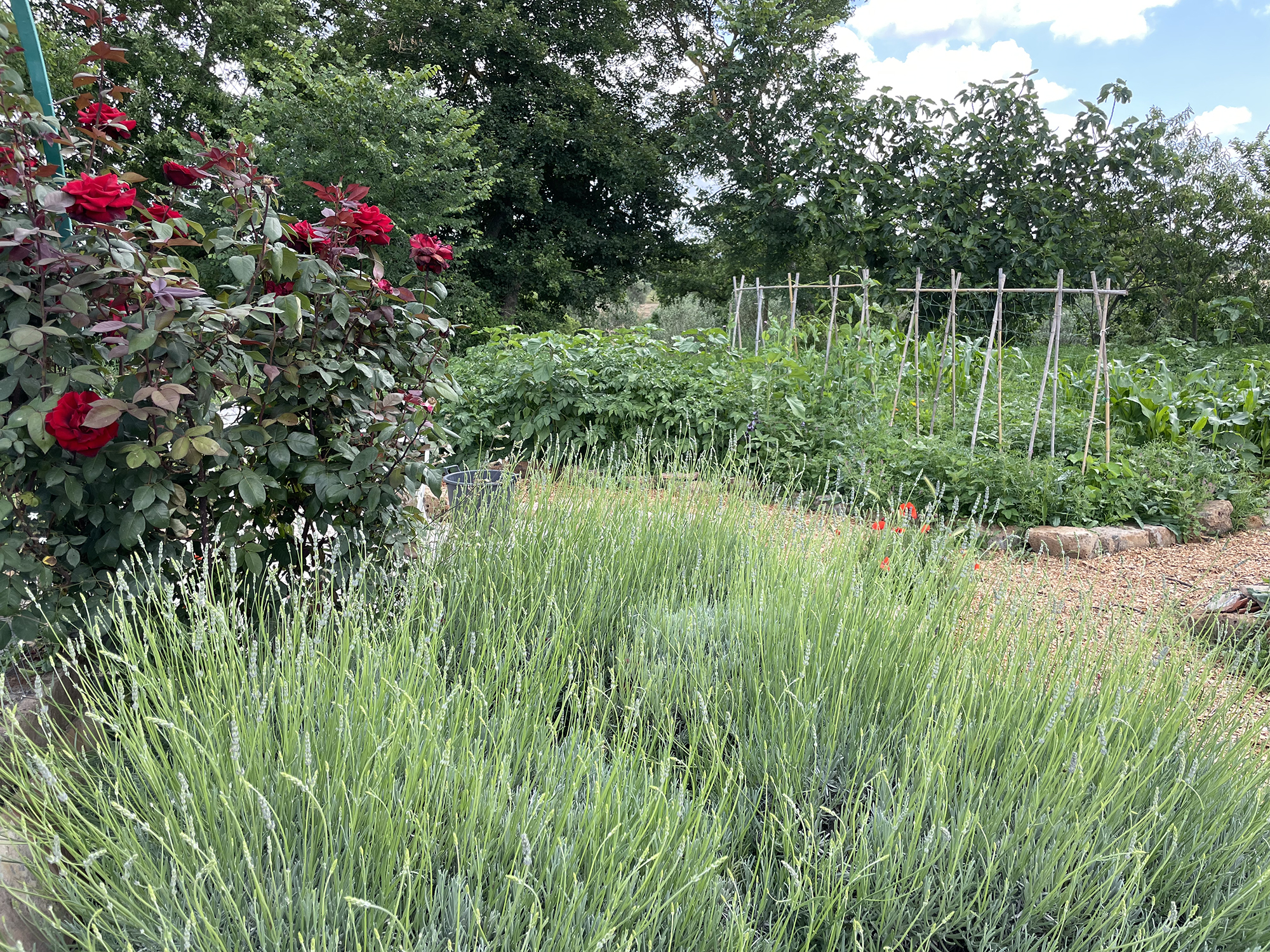
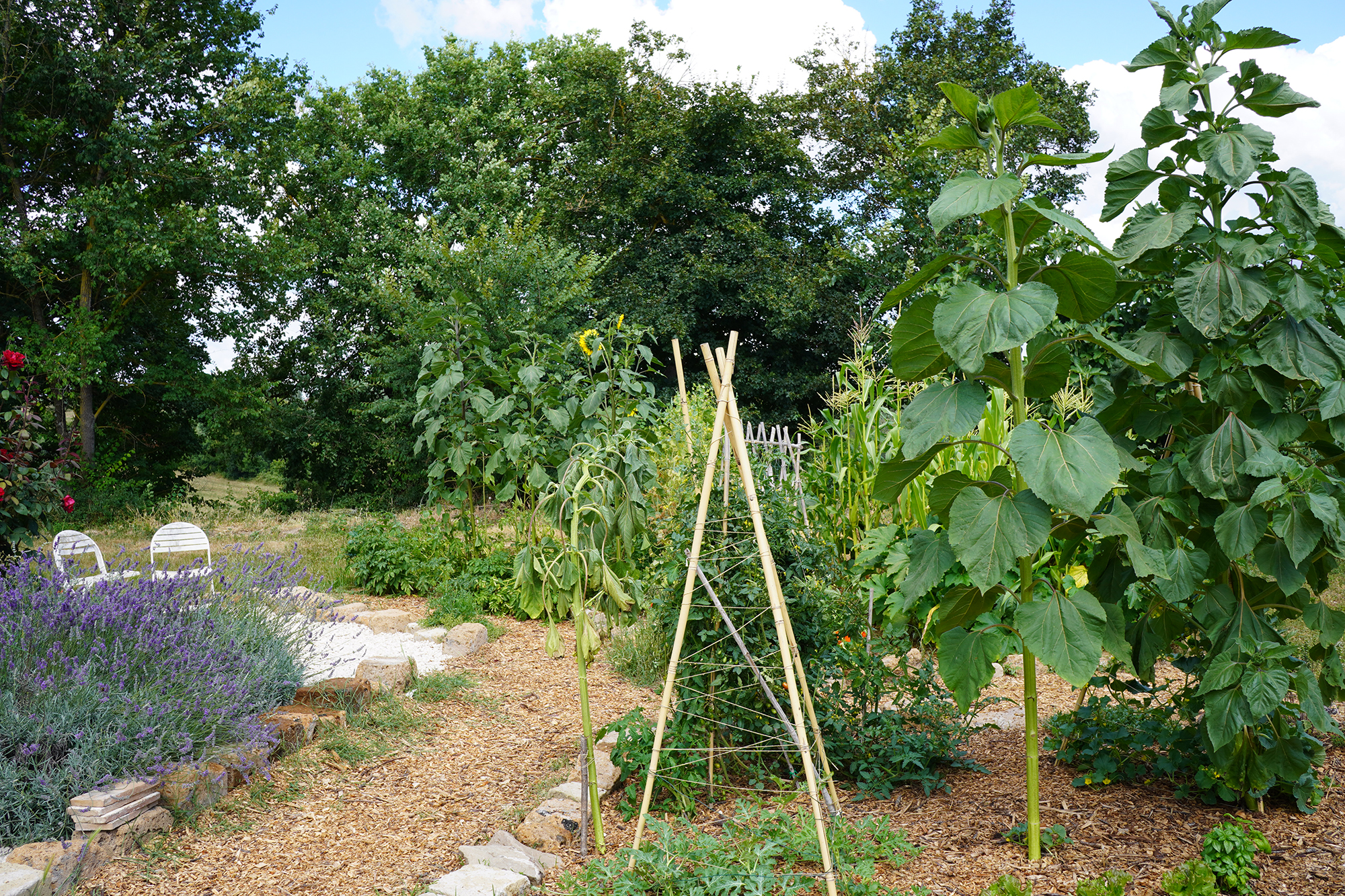
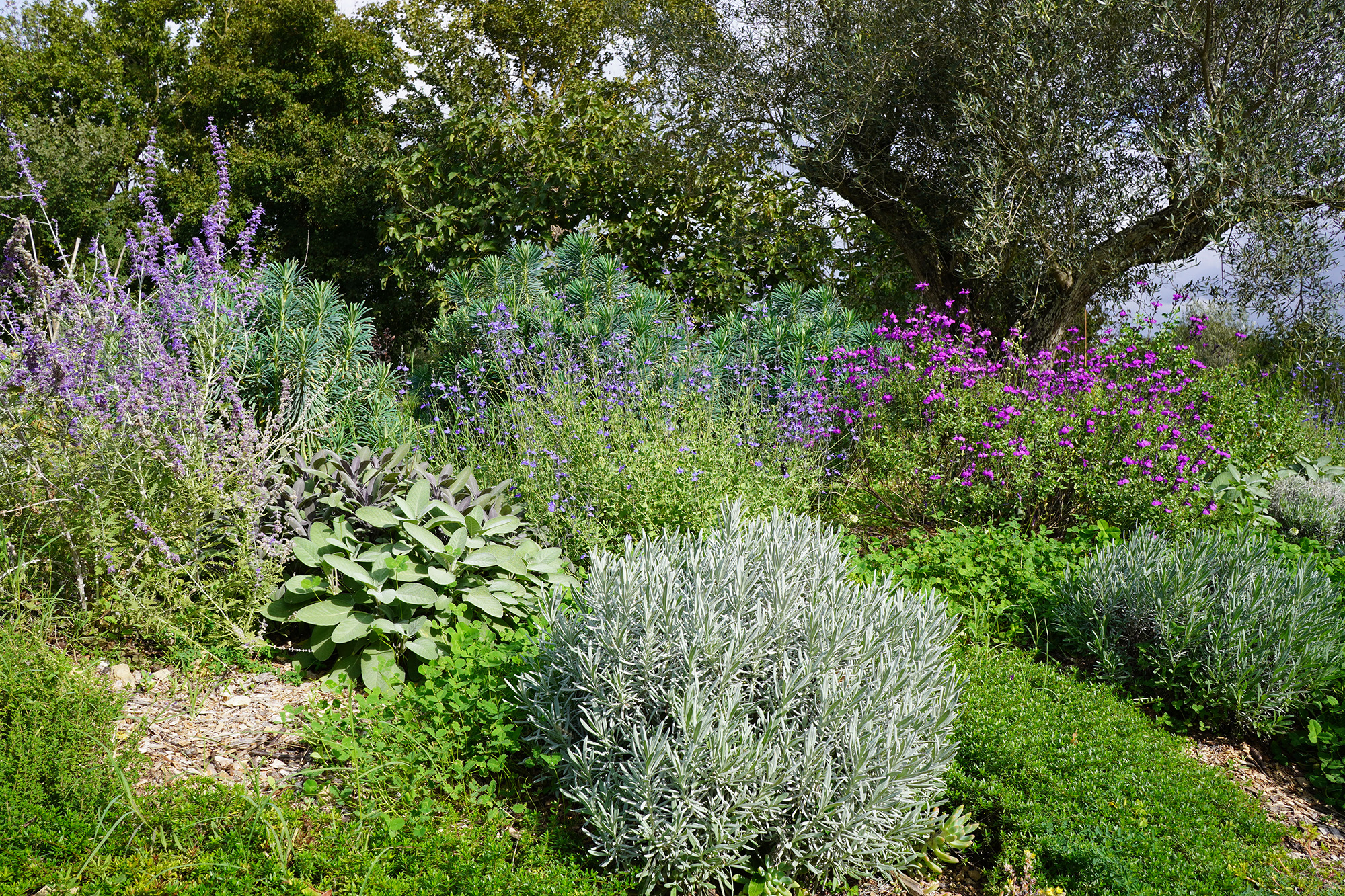
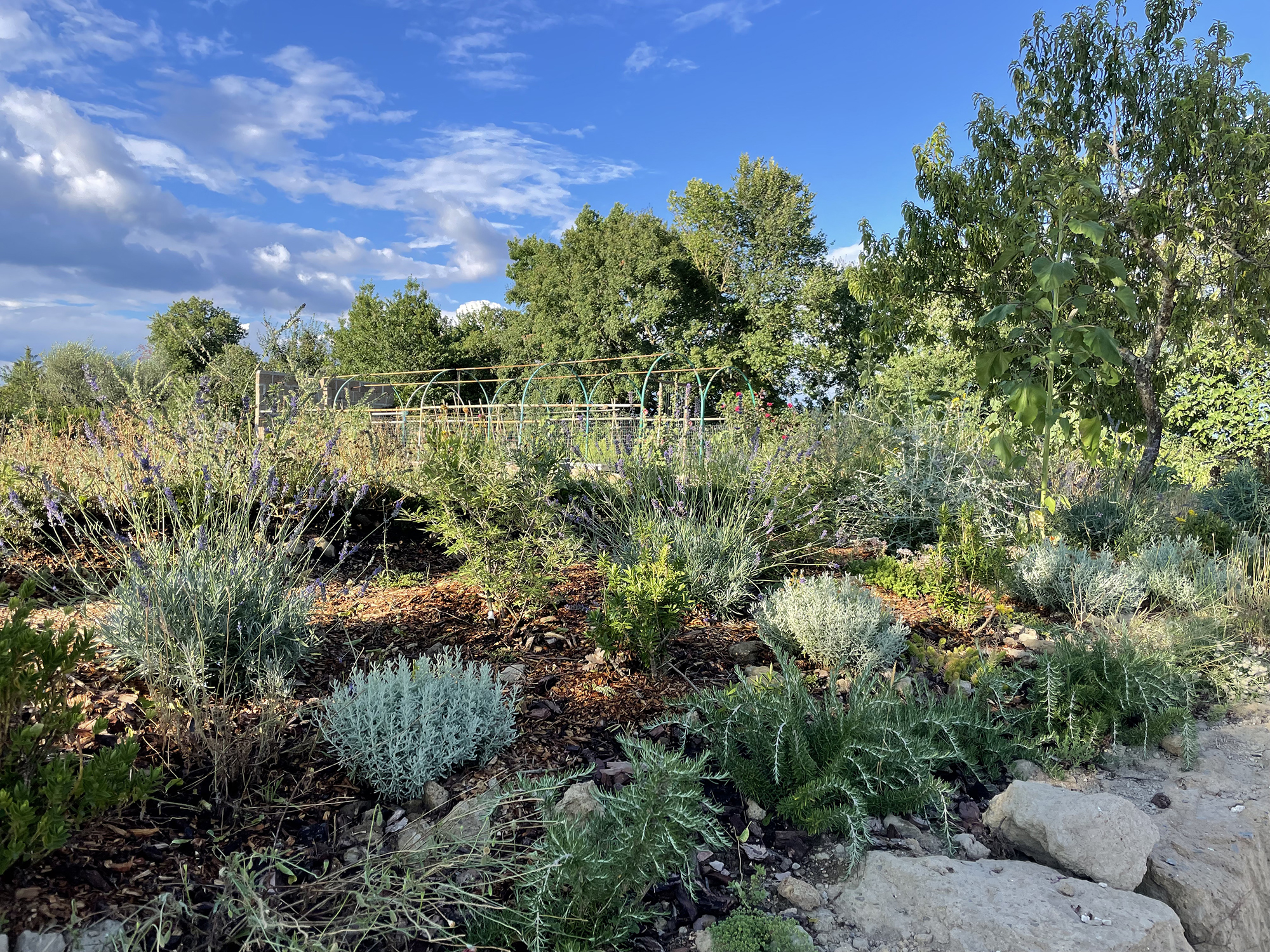
Border gardens were created at the newly terraced areas. The planting consists of perennial Mediterranean (medicinal) herbs, flowers and bushes, with emphasis on very hardy, low water need plants. The border gardens are not watered additionally.
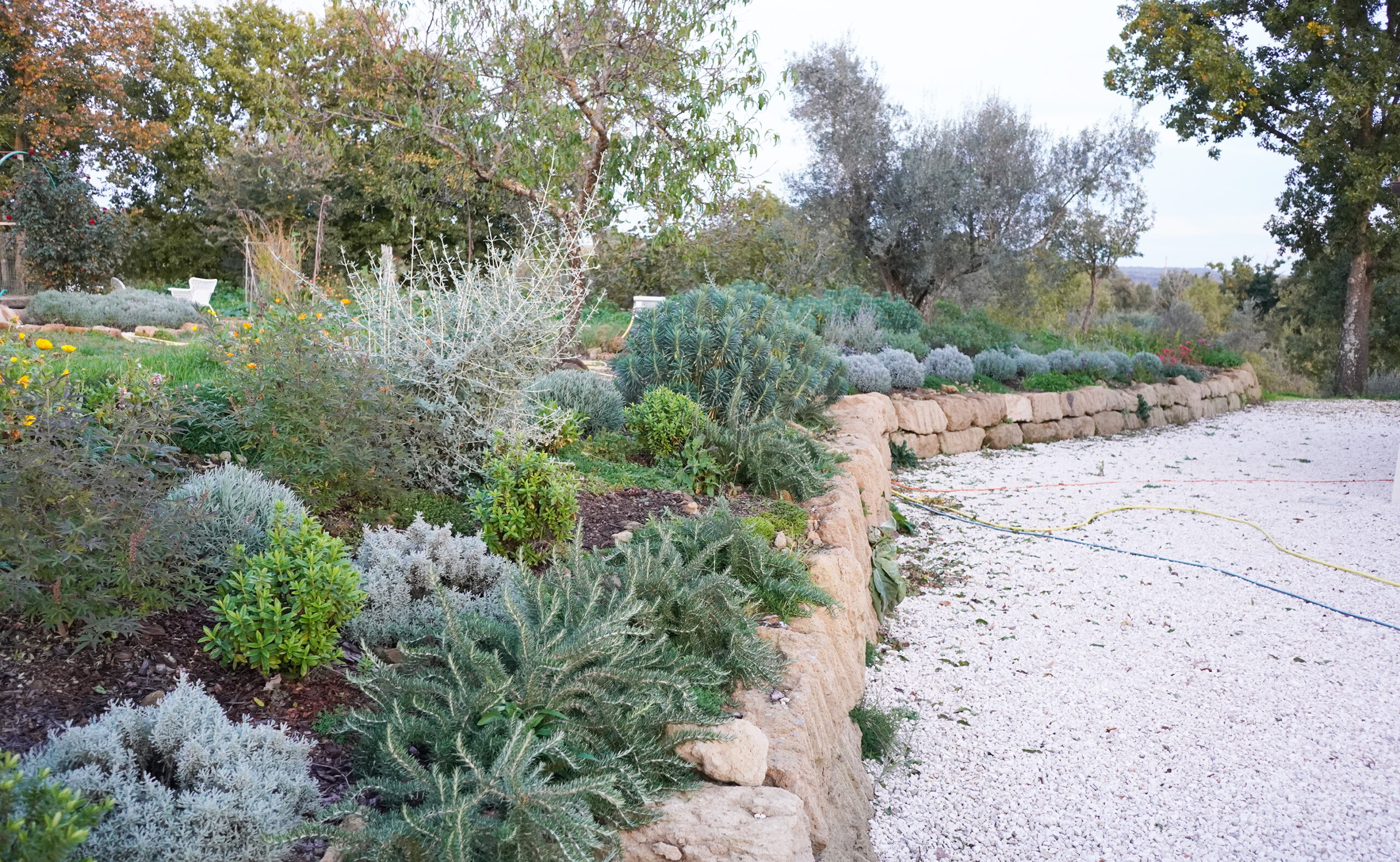
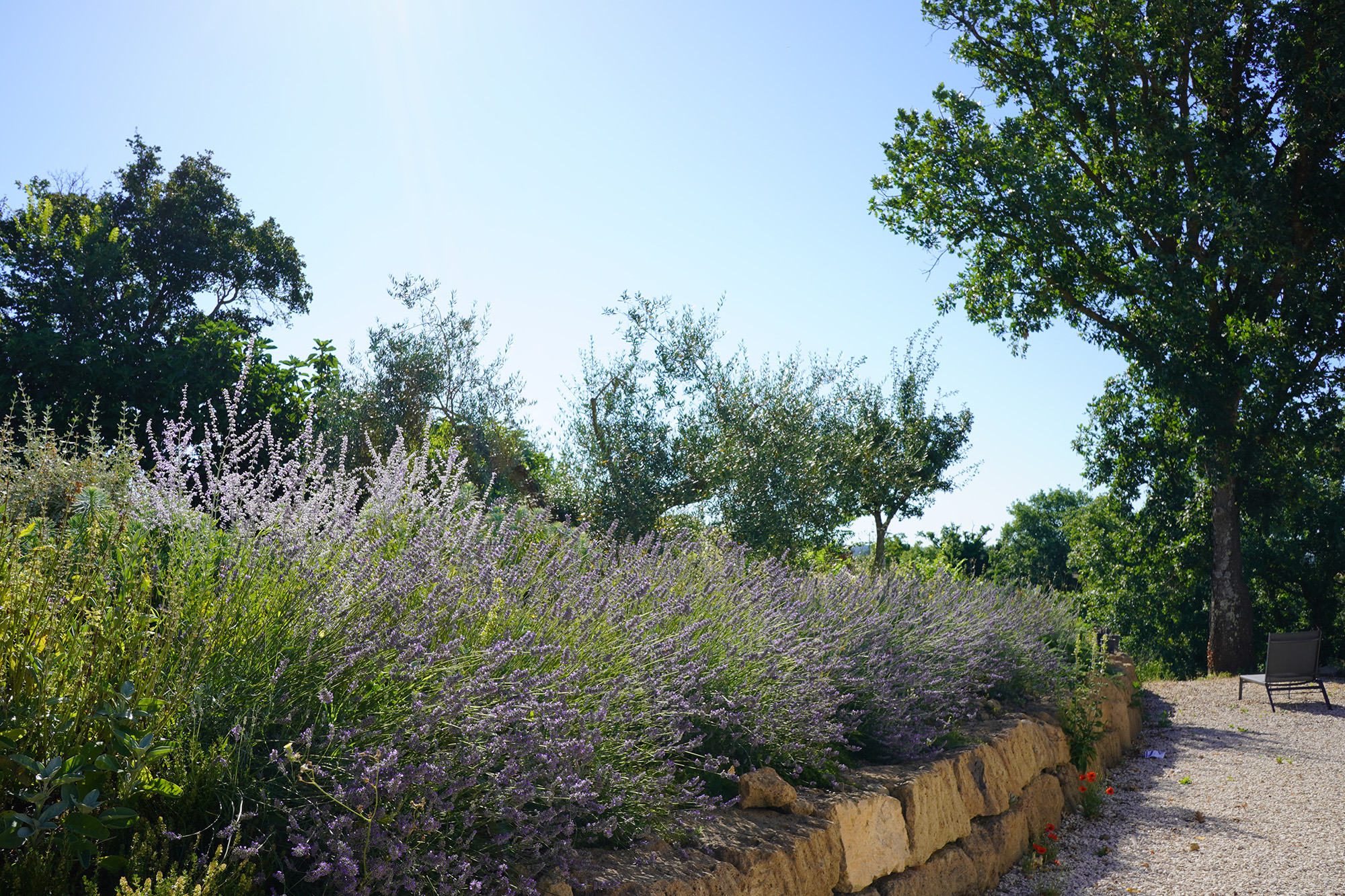
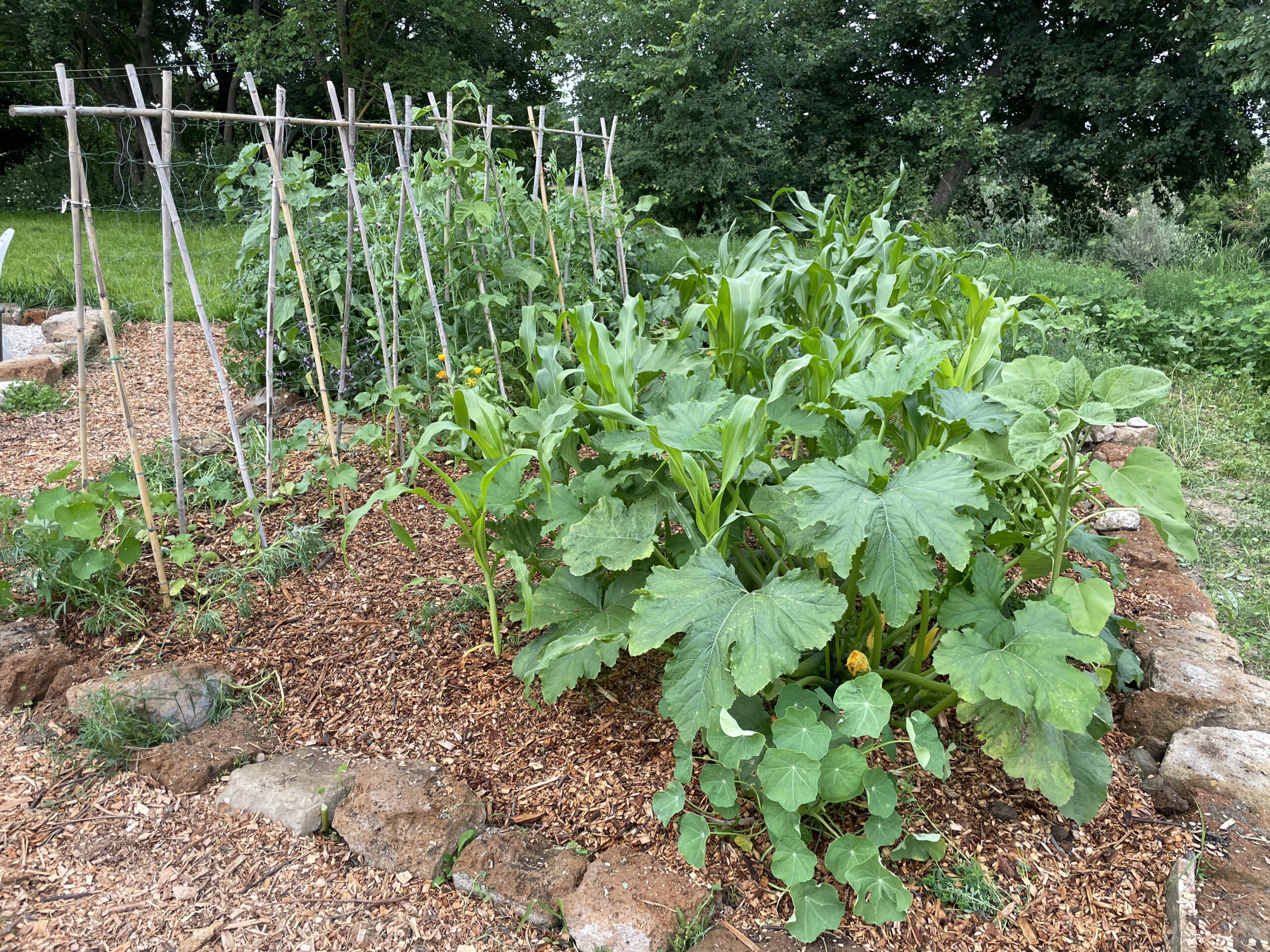
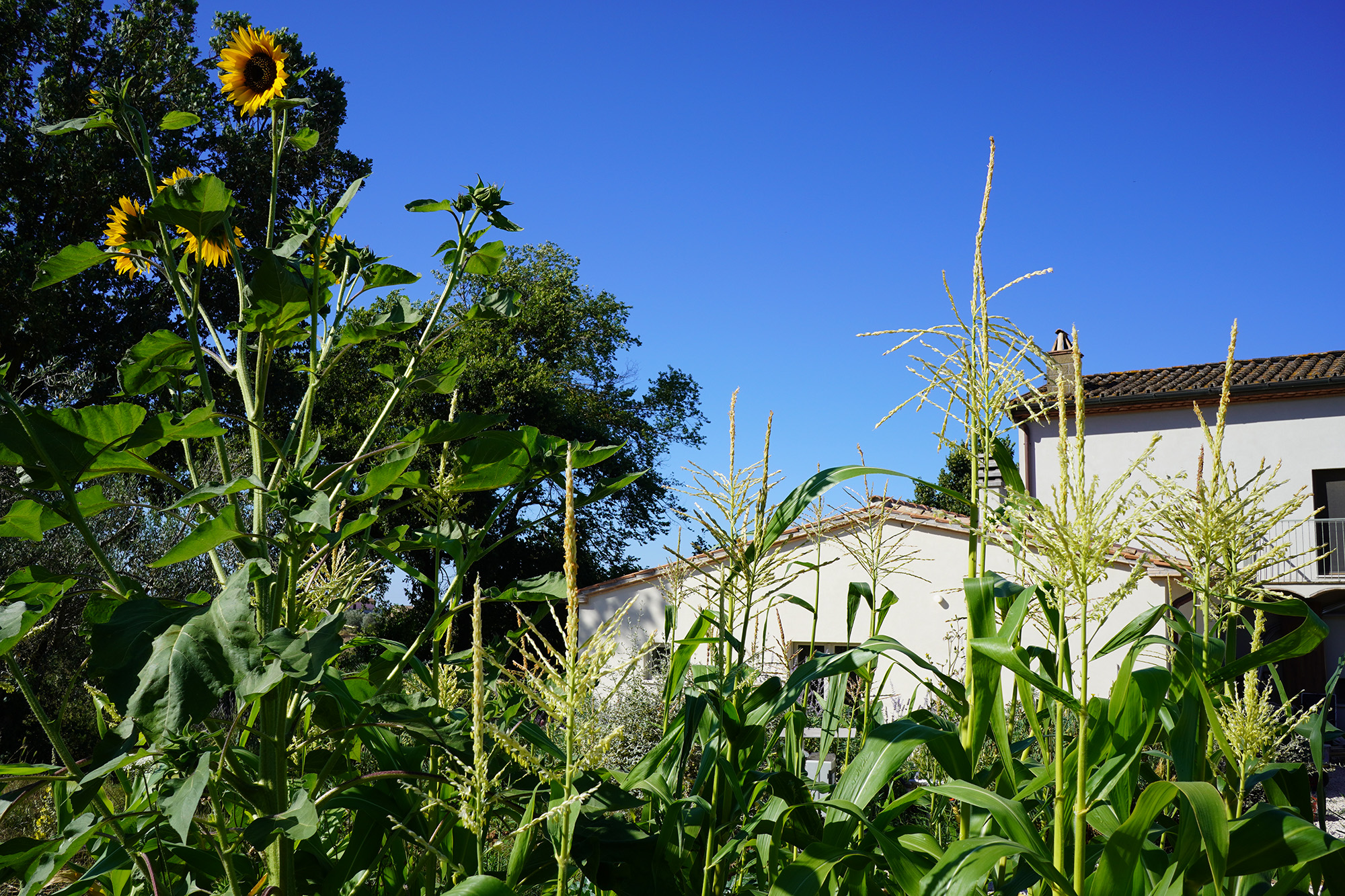
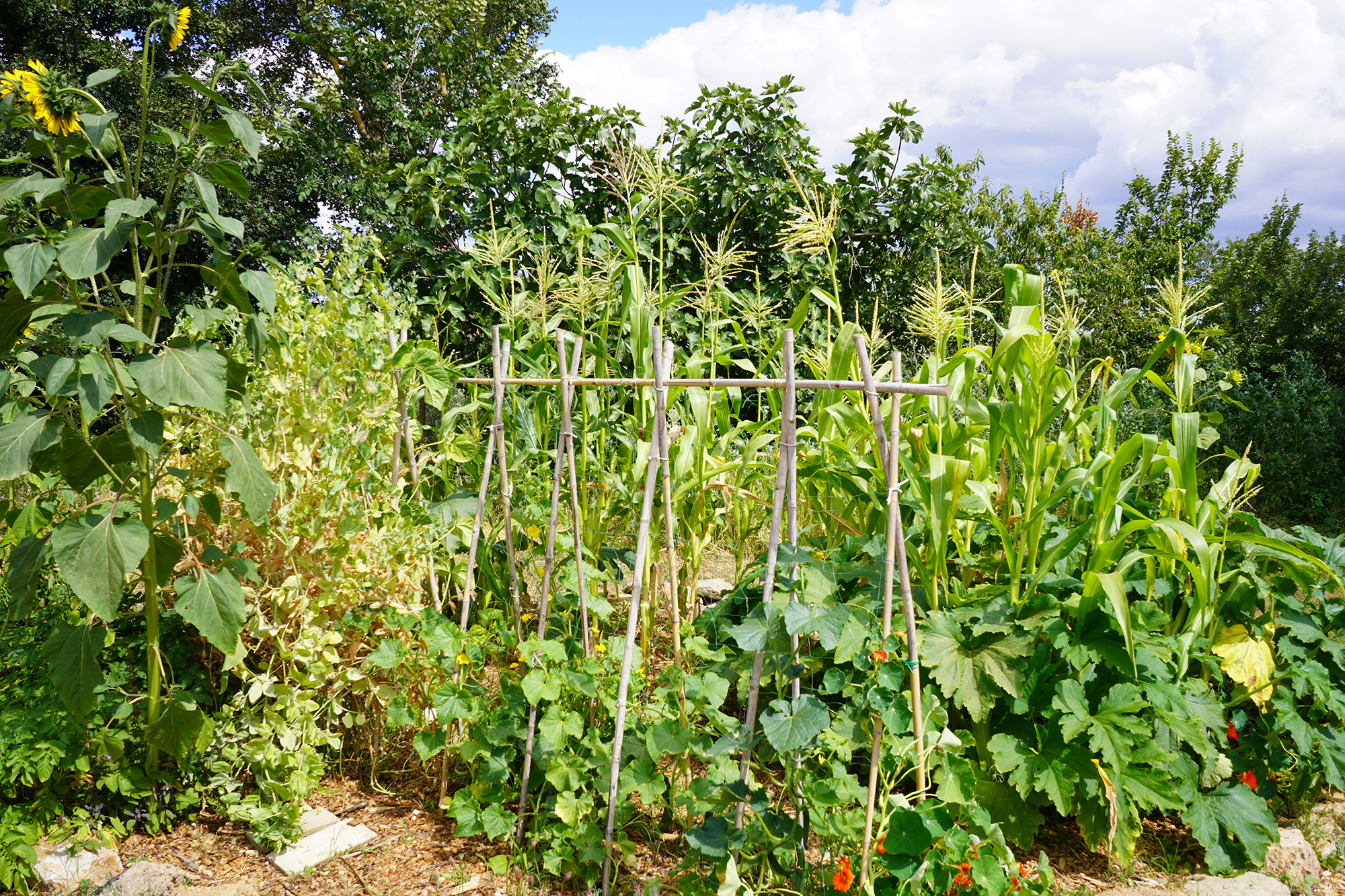
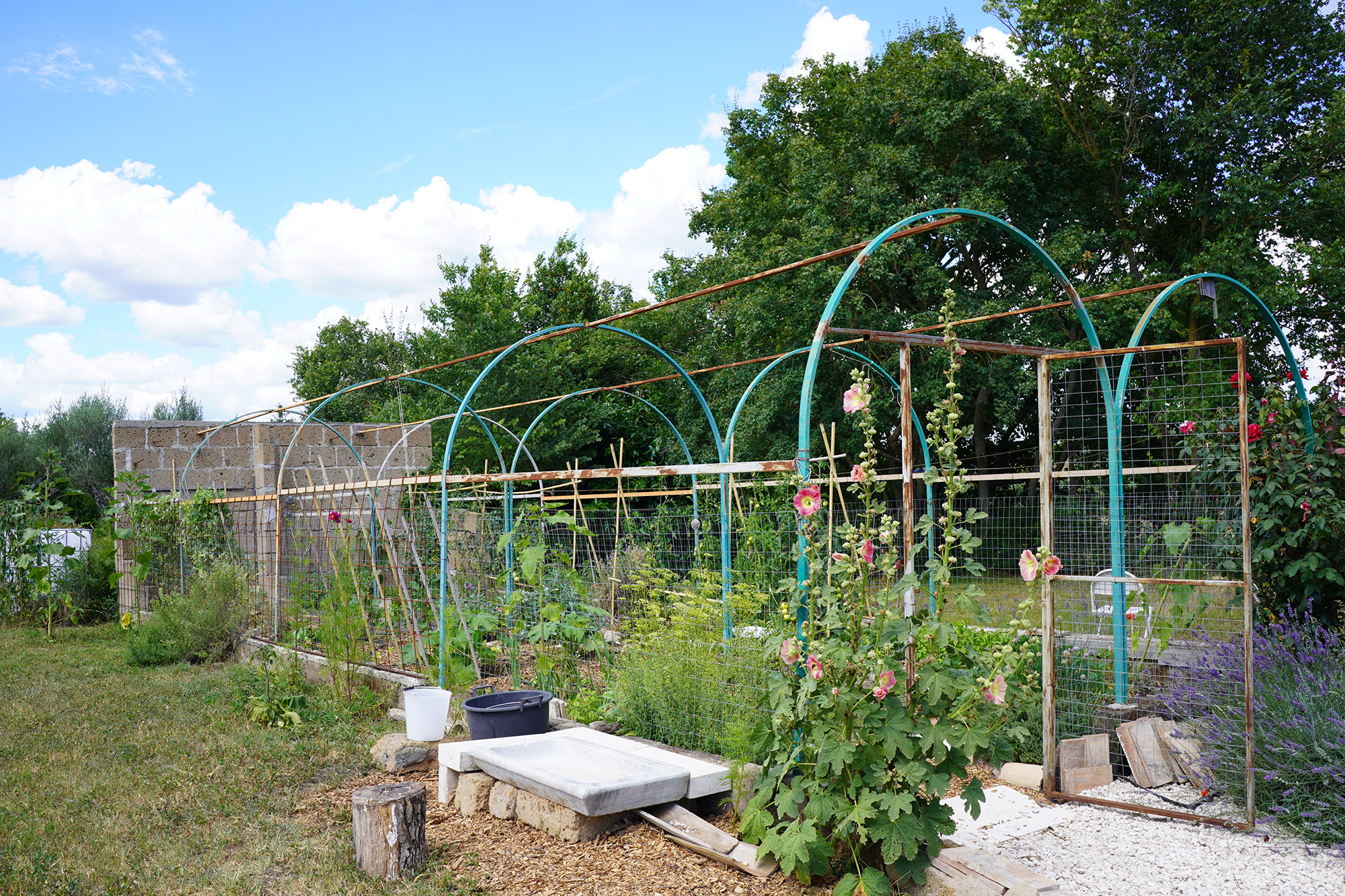
The kitchen garden has an open and an enclosed area. The enclosure protects from wild animals and serves for more sensitive crops—the structure was inherited and modified. The open garden area is planted with larger crops such as corn, potatoes, melon. A micro-drip system is installed at ground level.
Fruit trees are located in the area surrounding the kitchen garden and include figs, peaches, pomegranates, kaki and quince.